
Lately, one type of putter has been getting more attention than almost anything else in the golf equipment world.
It’s the

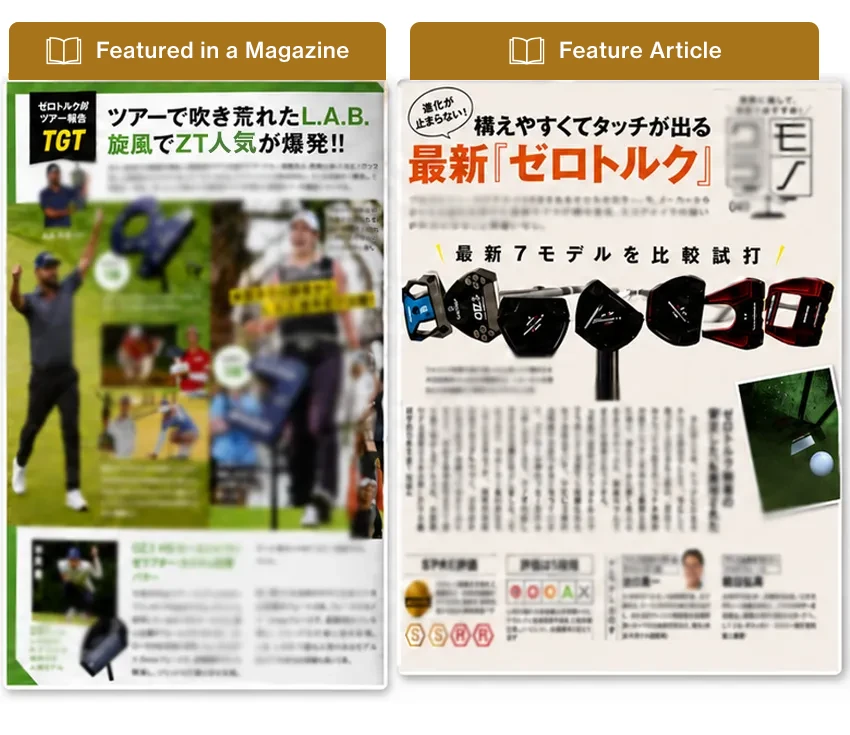
Chances are you’ve already seen it in golf magazines, on YouTube, or across social media.
So why is everyone suddenly talking about zero-torque putters?
Because they solve the most important problem in putting, starting the ball on line, in a simple way. The fix comes from how the club is built, not from changing your stroke.

 “Start the ball straight at your target.”
It sounds simple.
But when you actually try it,
few motions in golf are harder.
The shorter the putt,
the more even a tiny error in face angle shows up in the result.
3 feet. 5 feet. 6 feet.
They look easy because they’re short,
but they’re actually the putts where you feel the most pressure.
“Don’t push it right.”
“Don’t pull it left.”
“I have to start it on line.”
“Don’t leave it short.”
“Don’t hit it too far past the hole.”
The moment those thoughts creep in,
your wrists move a little.
The face opens a little.
You decelerate a little at impact.
Your stroke tightens up, and the path drifts ever so slightly.
That tiny drift is all it takes
for the ball to slide past the hole.
You might think this is just a matter of skill or practice.
But did you know that the basic design of a conventional putter, the way the head and shaft are connected,
makes it inherently hard to start the ball straight?

Conventional putters have a structural flaw that works against you when you aim at a target.
That flaw is the head’s“twisting motion” (torque).
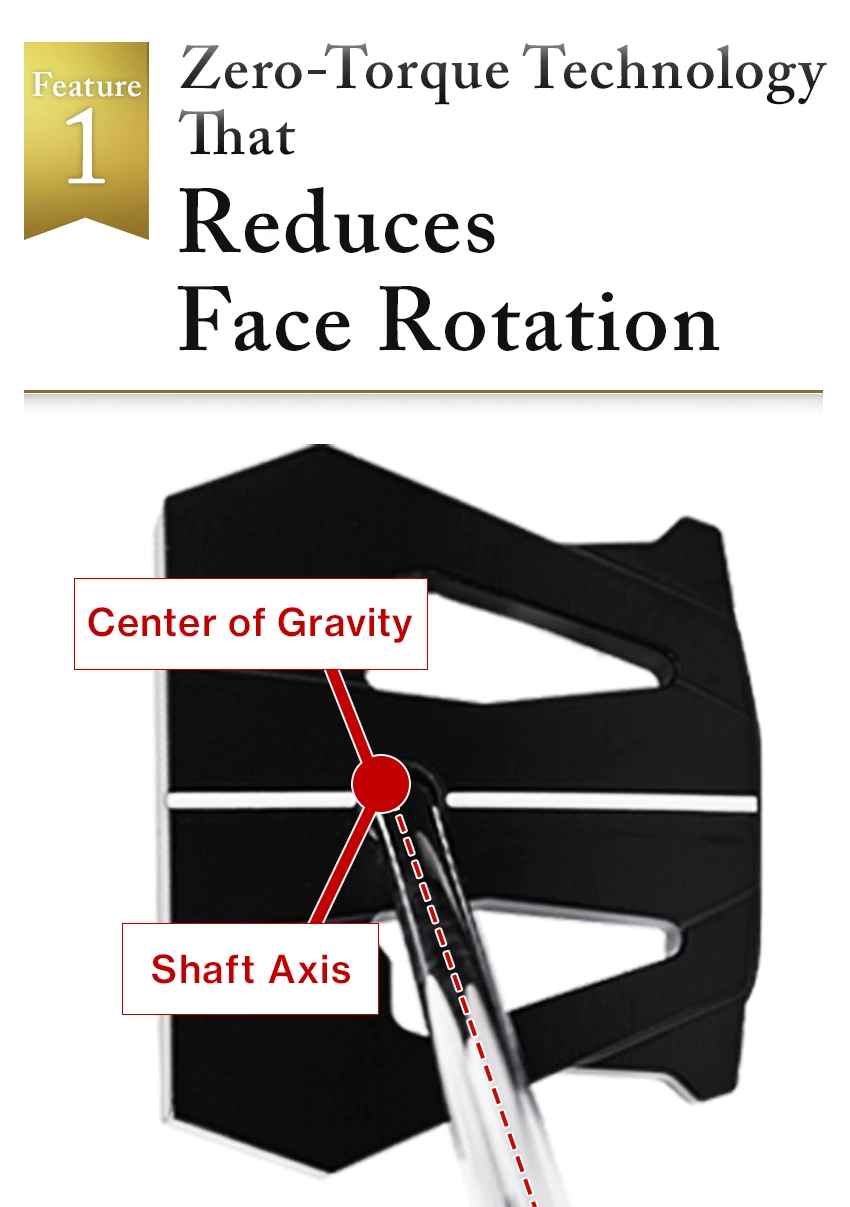
On a conventional putter, the center of gravity of the head sits off the line of the shaft axis.
Because of that offset, the head naturally twists during the stroke, so the face opens and closes on its own.
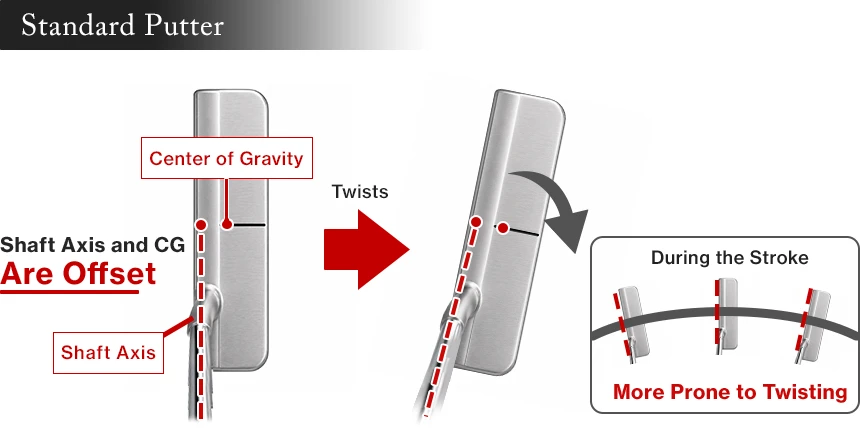
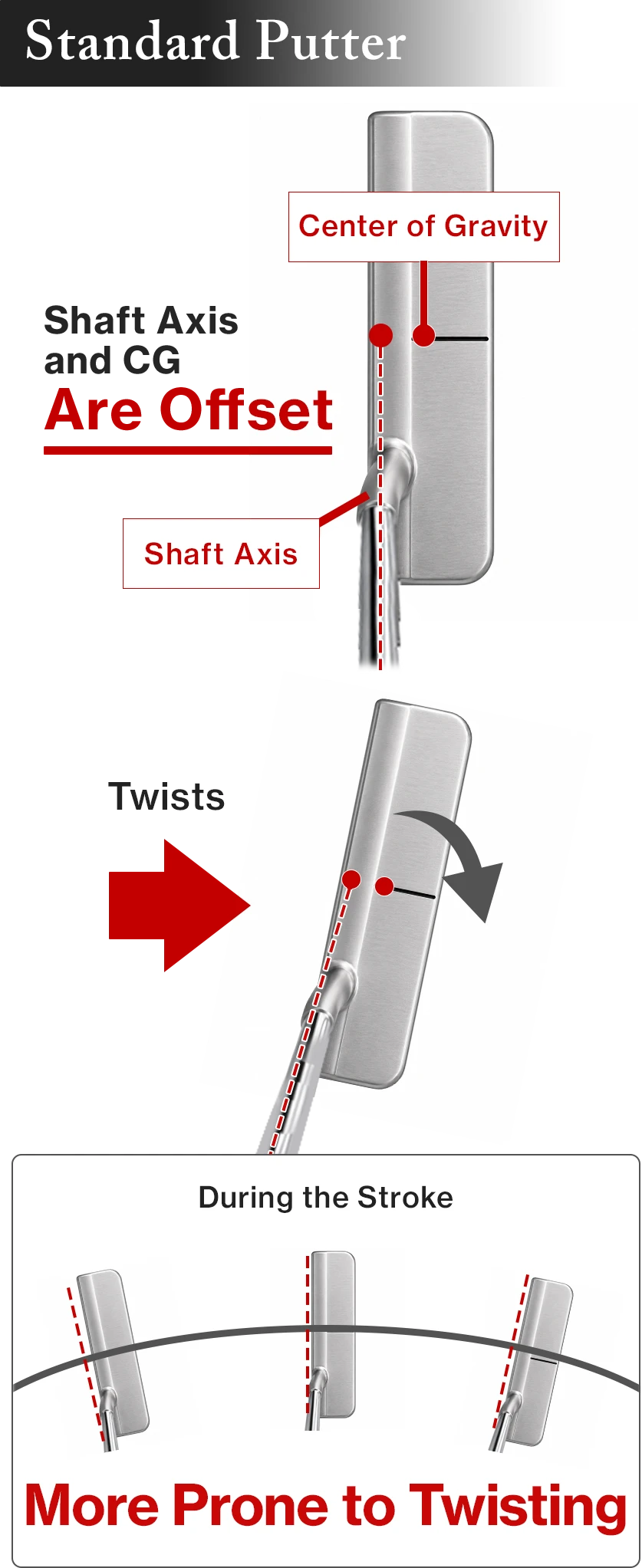
That means you have to square the face at exactly the right moment, while it’s rotating, and still strike the ball on the sweet spot.
But under pressure, your stroke tightens up, or your hands and wrists take over, and that delicate timing falls apart.
Sound familiar?
So here’s a question:
What if you had a putter that didn’t twist in the first place, with the shaft axis and center of gravity aligned
so the face naturally stays square?
Wouldn’t you miss less often, and miss by less when you did?

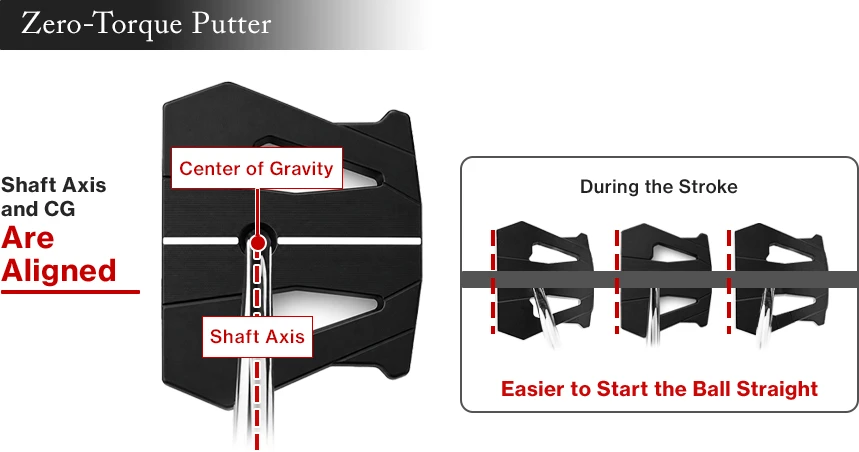
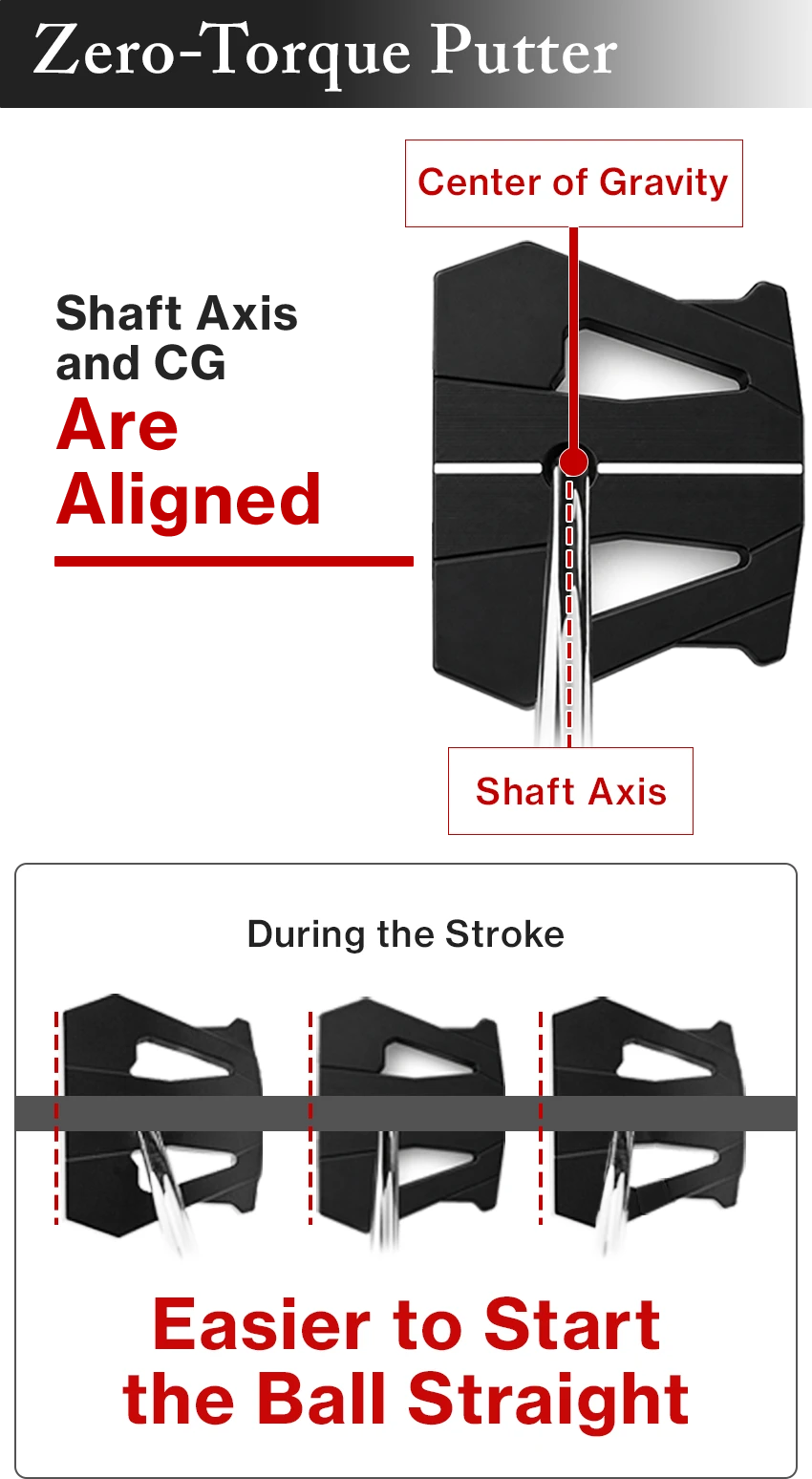
The defining feature of a zero-torque putter is that it eliminates the built-in twisting, which
keeps the face from opening and closing and keeps your start line from drifting.
On a conventional putter,
the center of gravity is offset from the shaft axis,
so the face tends to rotate open and closed during the stroke.
In other words, even when you’re trying to move the putter straight,
the club itself is trying to rotate.
That tiny change in face angle
is what makes you miss short putts,
and on long putts it hurts your speed control and leads to three-putts.
Zero-torque design is
the technology that removes that unwanted face rotation,
so the ball naturally starts toward your target.
It turns the putter from
“a club you have to time and square with your hands”
into “a tool whose design helps keep you on line.”
That’s exactly why zero-torque putters are getting so much attention right now.

Making putts comes down to three key elements:
1. Start line
Can you start the ball on your intended line?
2. Speed (distance control)
Can you hit it with exactly the right pace to reach the hole?
3. Green reading
Can you read the slope and grain to pick the correct line?
You need all three to make a putt.
If you struggle with putting,
you’re trying to manage all three at once, on every single stroke.
But when you get the full benefit of zero-torque design,
that process becomes far simpler.
First, the worry about your start line goes away.
And because pushes and pulls are reduced,
you’ll also make fewer speed mistakes caused by mishits.
Your read is done before you even step up to the ball, so
during the stroke, the only thing you need to think about is speed.
Speed, face control, hitting too hard with your hands:
all the things you used to juggle in your head get sorted out.
With face rotation reduced and your wrists kept quiet,
you can focus on one thing, speed, and everything else falls into place.
With that much clutter and doubt cleared out of your head,
your stroke naturally gets smoother, and you’ll make fewer mistakes under pressure.


Zero-torque putters make it easier to keep the ball on line.
That’s a huge advantage.
But traditional zero-torque putters also had
a couple of characteristics that not every golfer liked.
There were two main issues:
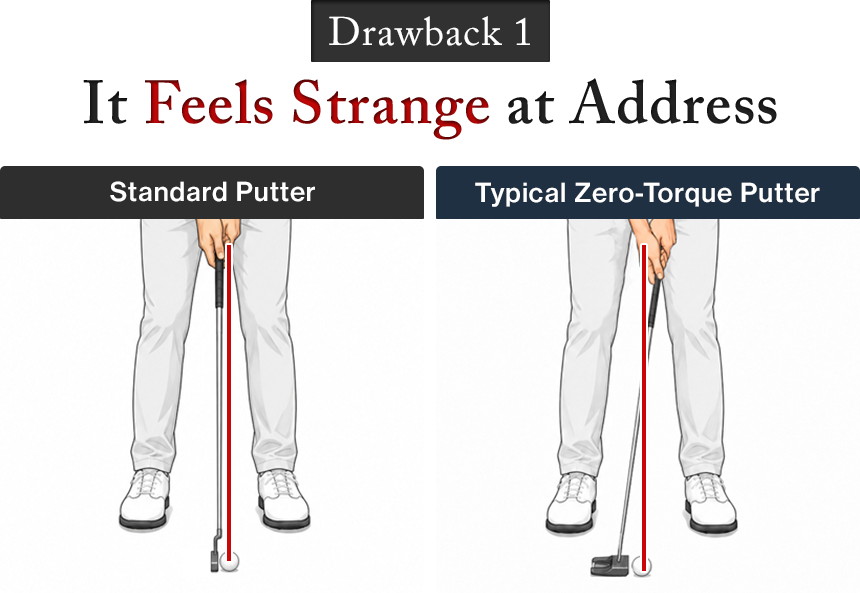
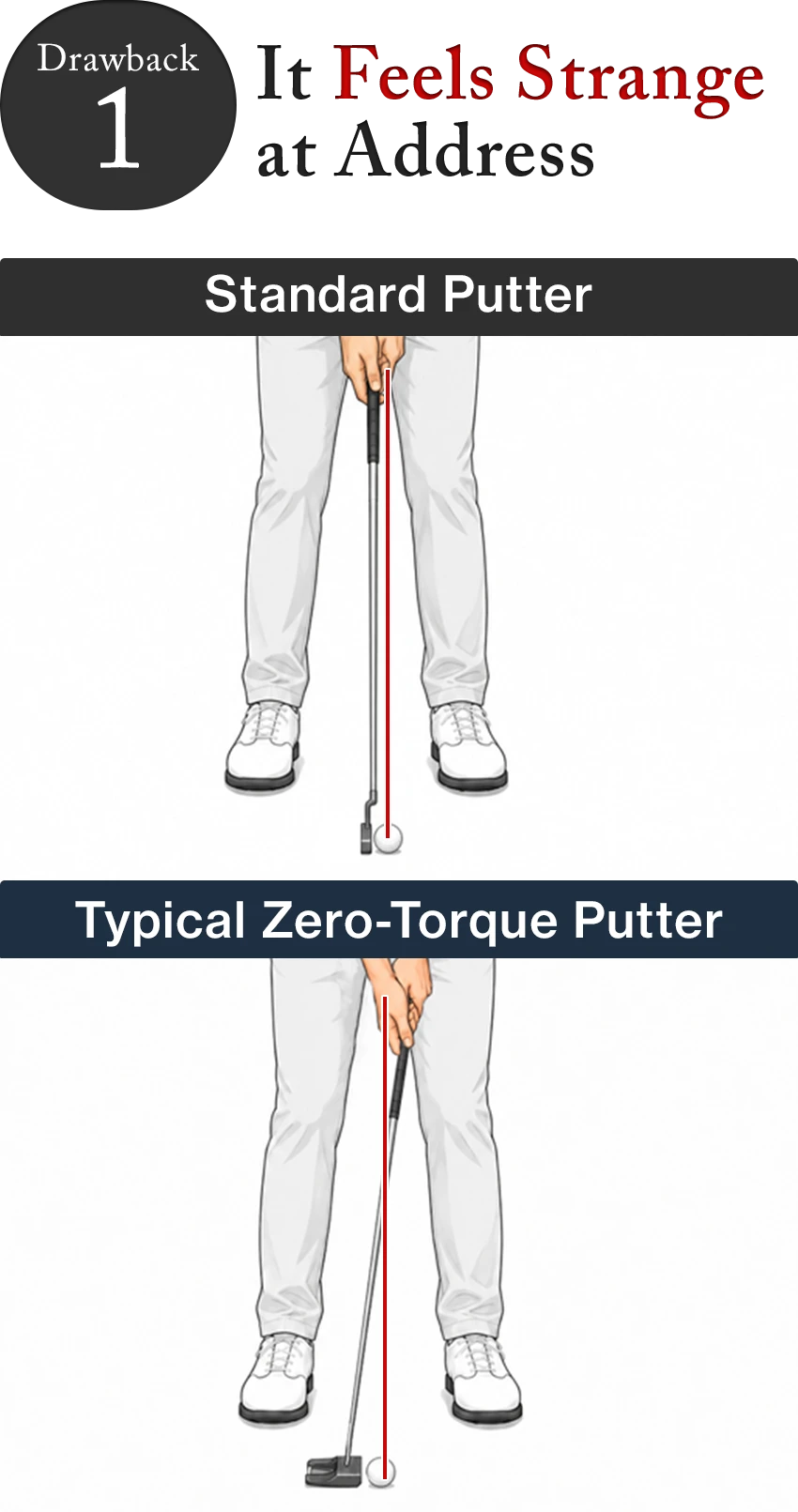
Because of how they’re built, zero-torque putters have
a different shaft position, and a different look at address, than a standard putter.
As a result, they tend to set up with an exaggerated amount of forward shaft lean.
For most golfers used to a regular putter, this leads to thoughts like:
“It just feels awkward to set up.”
“I’m not sure where the face is actually pointing.”
“I can’t make my normal stroke.”
And that discomfort carries into impact,
making these misses more likely:
No matter how good a putter is at holding its line,
it’s pointless if your contact gets worse.
For many golfers who say “zero-torque just isn’t for me,”
this unfamiliar look at address is the real reason.
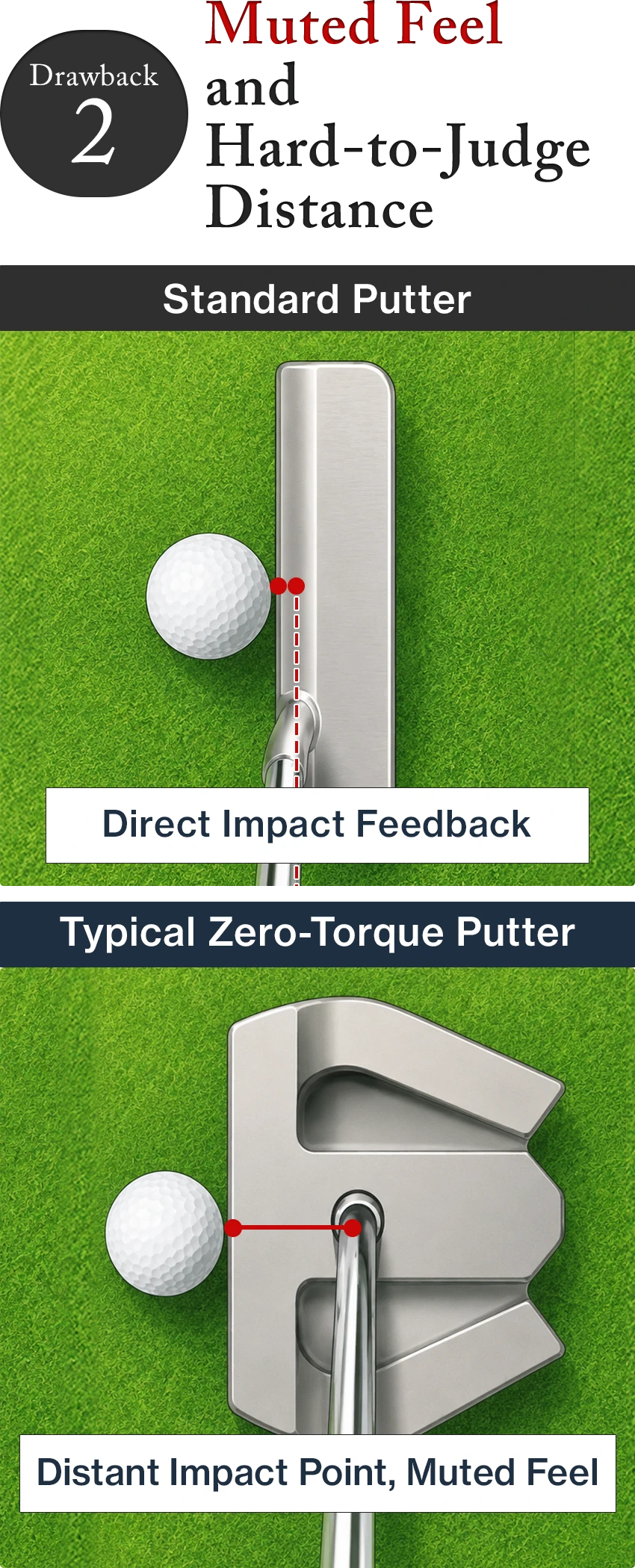
Putting isn’t just about direction.
Speed, meaning distance control, is just as important.
Especially on mid- and long-range putts,
a perfect line won’t save you from a three-putt if your speed is off.
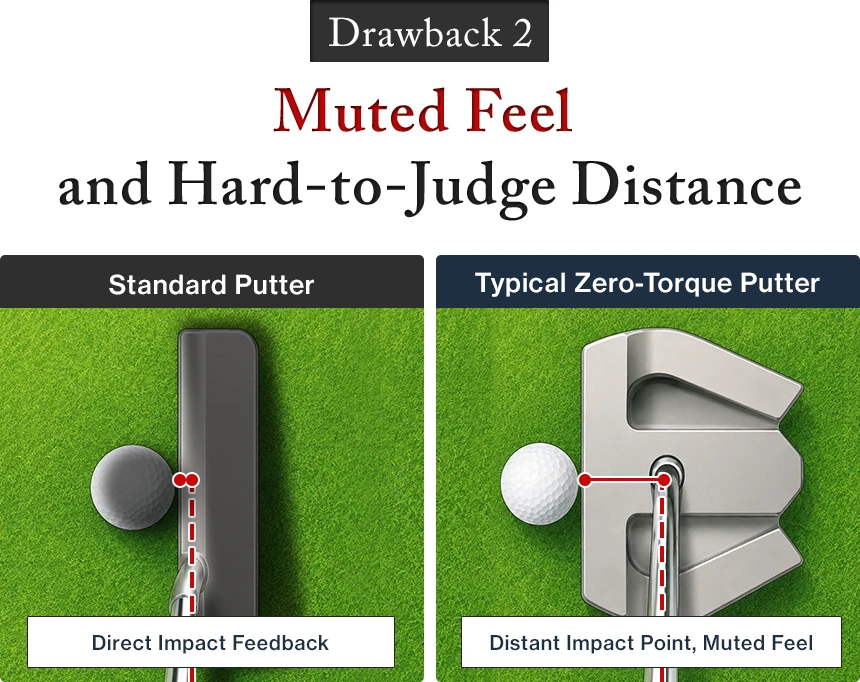
On traditional zero-torque putters,
the shaft is attached farther back from the face than on a standard putter,
so the feel at impact can come across as muted.
And if a zero-torque head simply uses the same face milling as a standard putter, golfers often say:
“It’s hard to feel small differences in distance.”
“I can’t tell if I hit it hard or soft.”
“The direction seems good, but I can’t control my speed.”
Until that dull feel is fixed,
plenty of golfers will stay curious about zero-torque without ever buying one.
That’s why we developed
a new putter design that maximizes the benefits of zero-torque
while fixing these weaknesses.

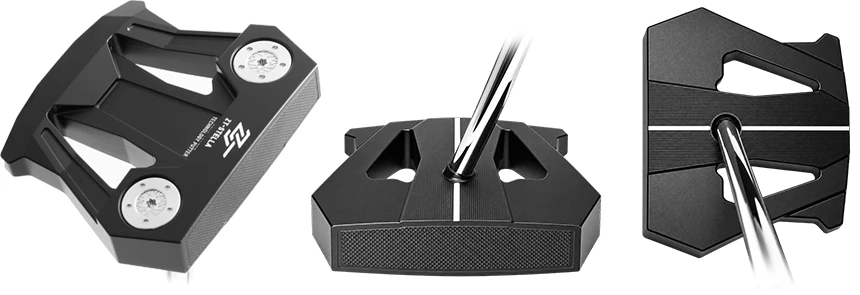
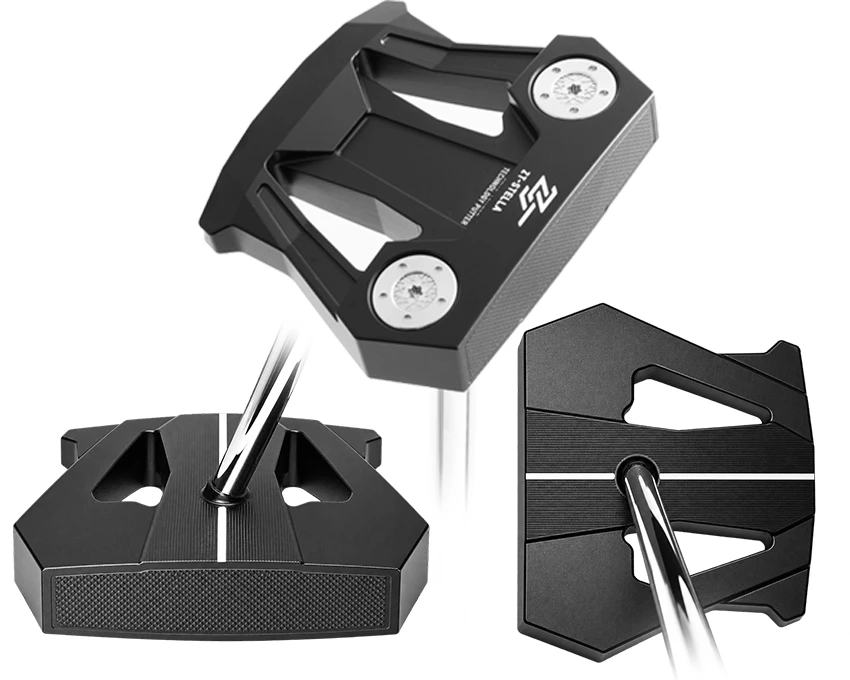
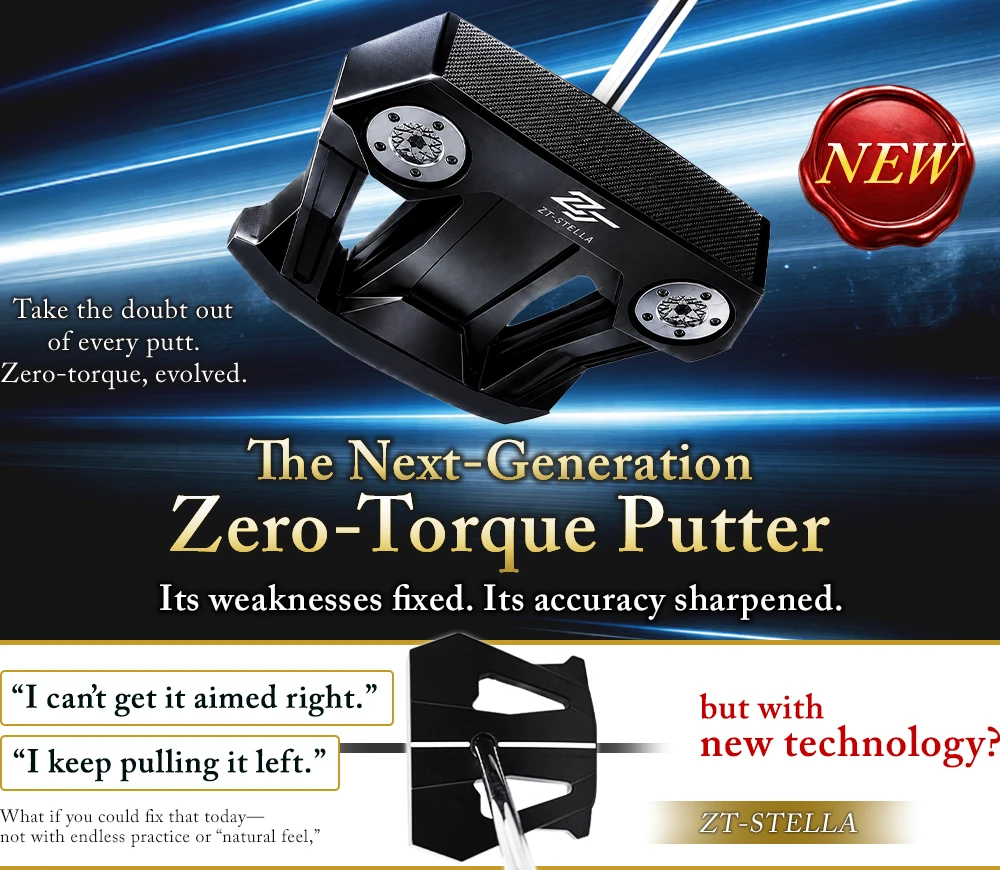
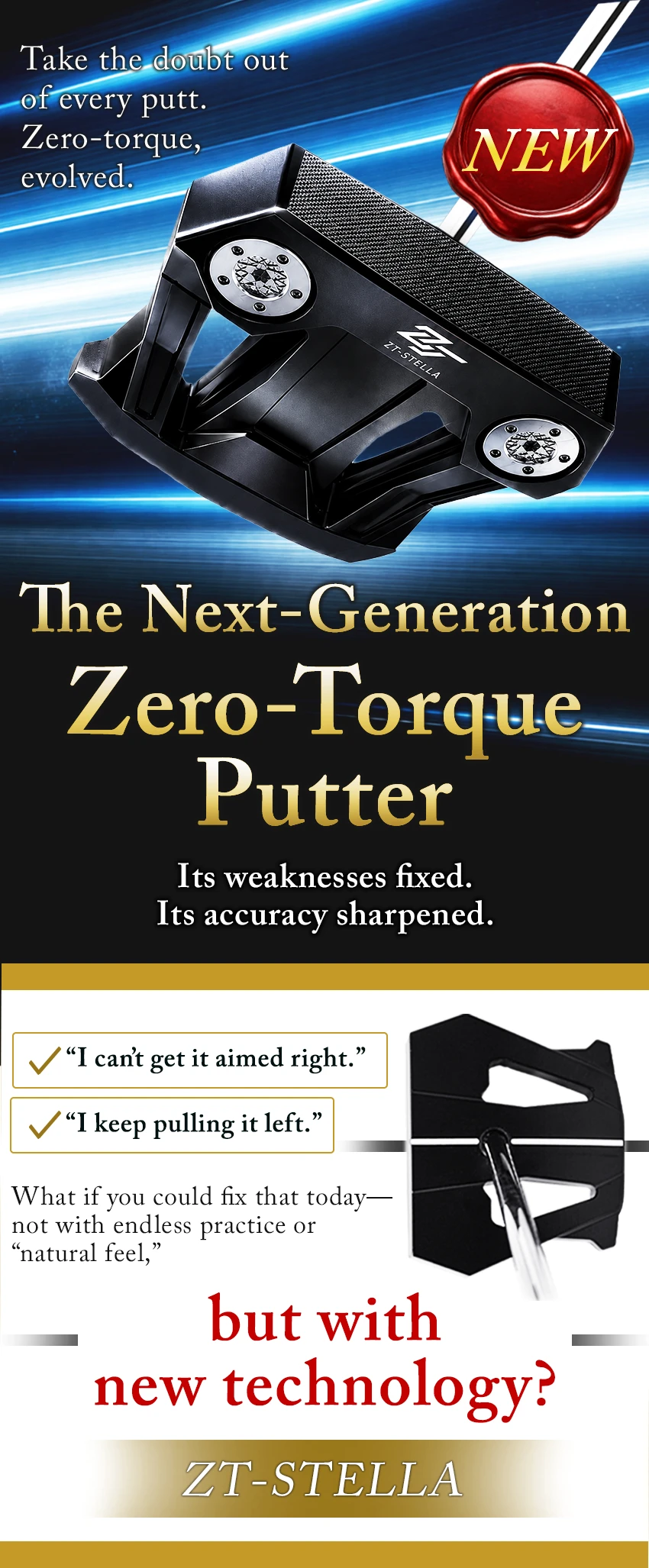
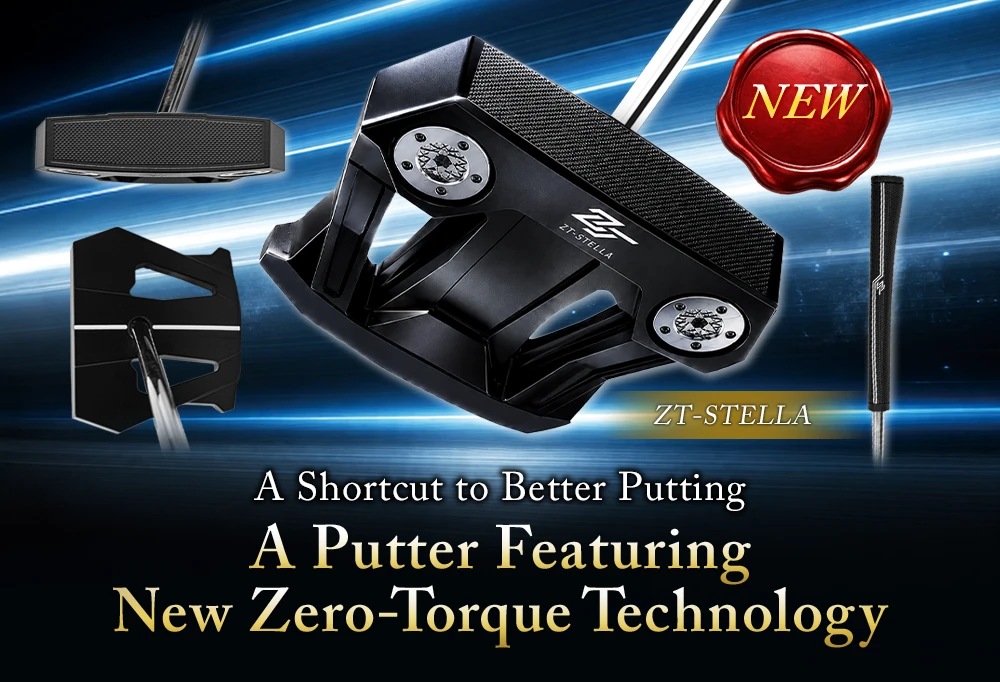
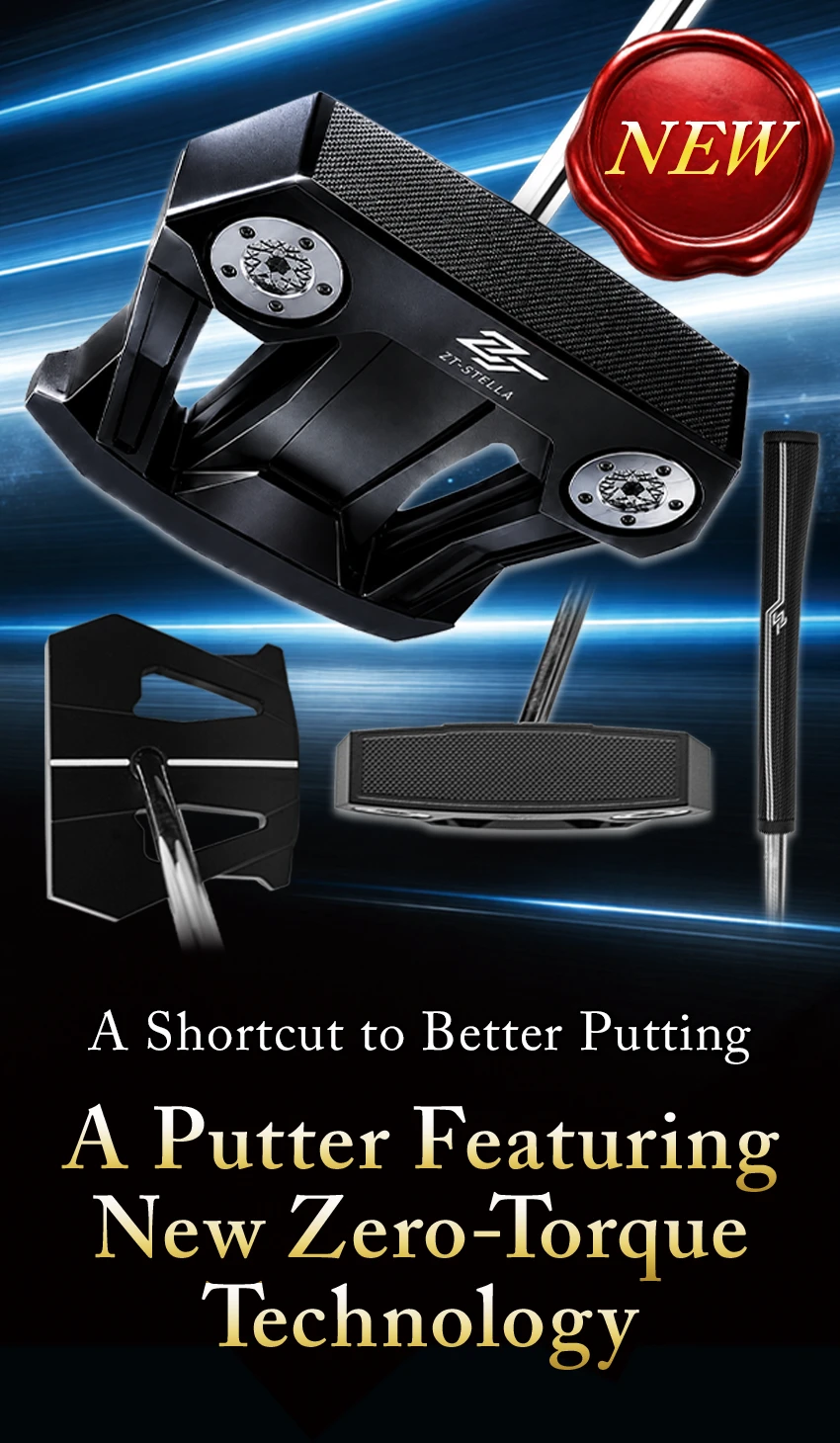
ZT-STELLA is built on zero-torque design that reduces face rotation.
On top of that, it addresses the issues
golfers worried about most with earlier models:
This is a new kind of zero-torque putter.
We didn’t just make it unusual for the sake of it.
Our goal was simple:
to deliver zero-torque stability with a feel close to a normal putter.
That’s why ZT-STELLA is
easy to use even if you’ve never tried zero-torque,
and easy to adopt if putting has been a struggle for you.
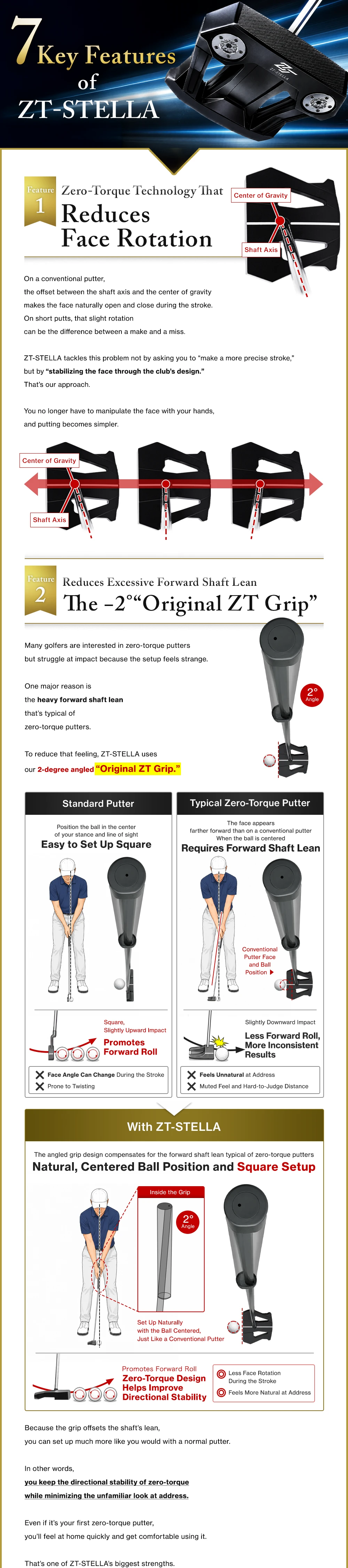

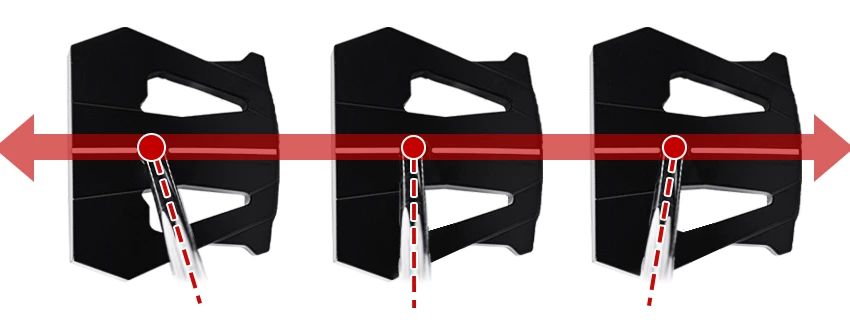
On a conventional putter,
the offset between the shaft axis and the center of gravity
makes the face naturally open and close during the stroke.
On short putts, that slight rotation
can be the difference between a make and a miss.
ZT-STELLA tackles this problem
not by asking you to “make a more precise stroke,”
but by “stabilizing the face through the club’s design.”
That’s our approach.
You no longer have to manipulate the face with your hands,
and putting becomes simpler.
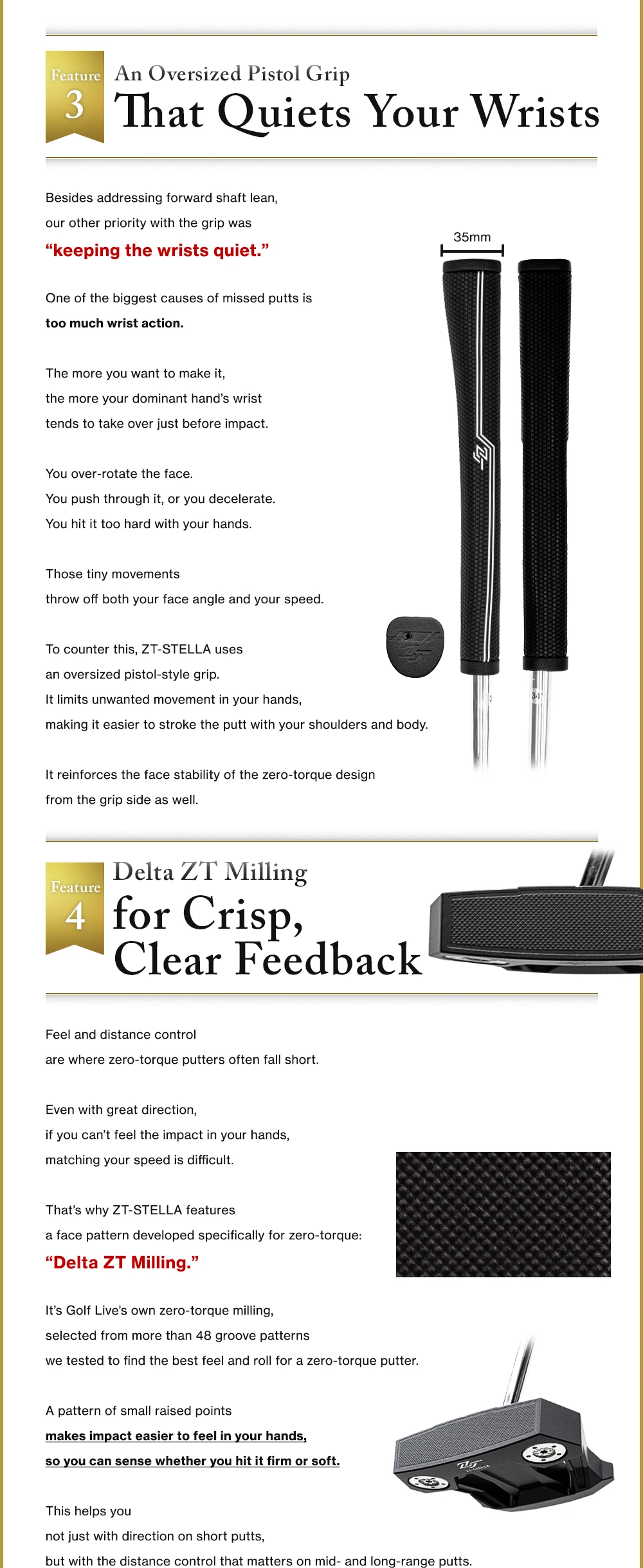
Many golfers are interested in zero-torque putters
but struggle at impact because the setup feels strange.
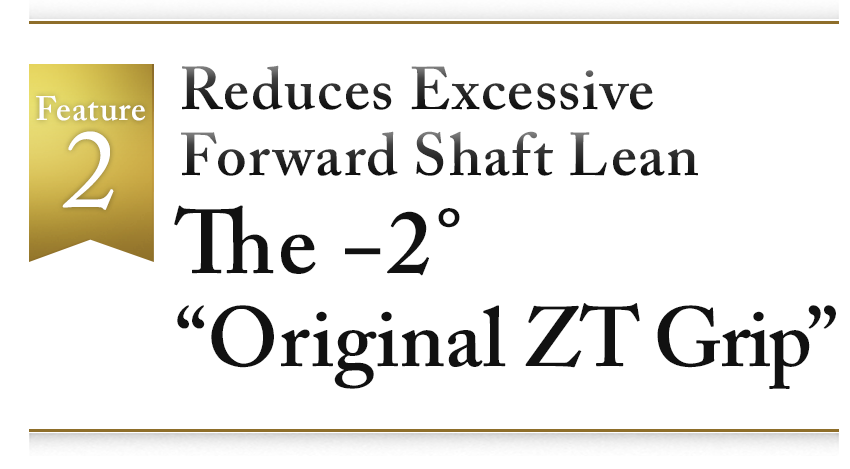
One major reason is
the heavy forward shaft lean that’s typical of zero-torque putters.
To reduce that feeling, ZT-STELLA uses
our 2-degree angled
“Original ZT Grip.”

Because the grip offsets the shaft’s lean,
you can set up much more like you would with a normal putter.
In other words,
you keep the directional stability of zero-torque
while minimizing the unfamiliar look at address.
Even if it’s your first zero-torque putter,
you’ll feel at home quickly and get comfortable using it.
That’s one of ZT-STELLA’s biggest strengths.
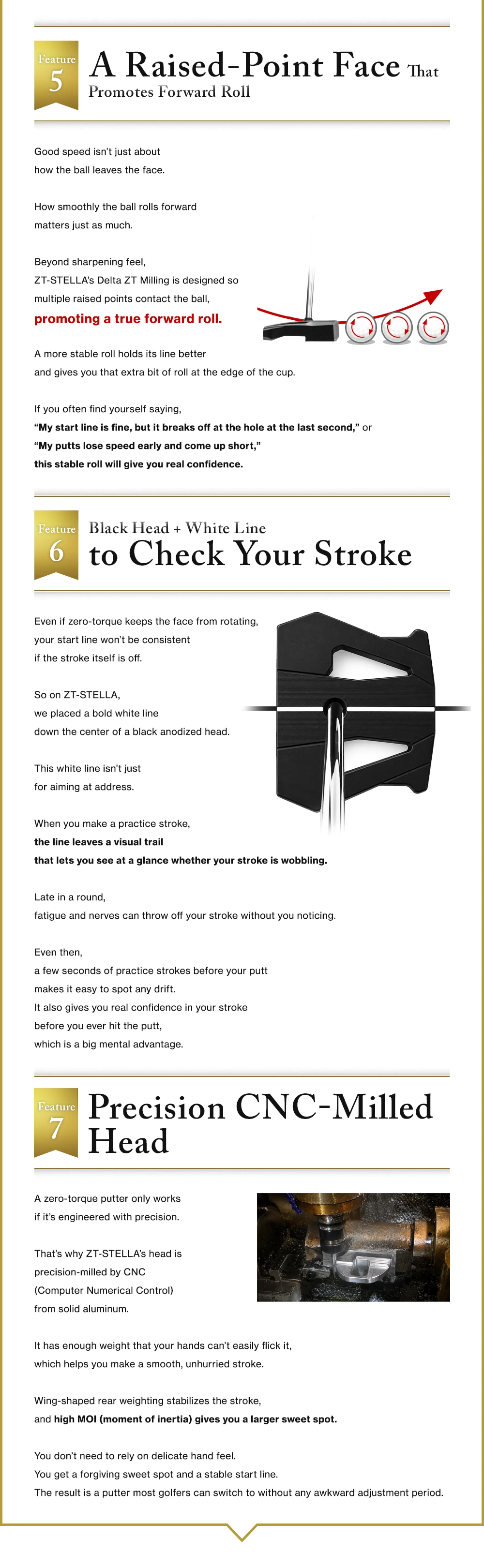
Besides addressing forward shaft lean,
our other priority with the grip was
“keeping the wrists quiet.”
One of the biggest causes of missed putts is
too much wrist action.
The more you want to make it,
the more your dominant hand’s wrist tends to take over just before impact.
You over-rotate the face.
You push through it, or you decelerate.
You hit it too hard with your hands.
Those tiny movements
throw off both your face angle and your speed.
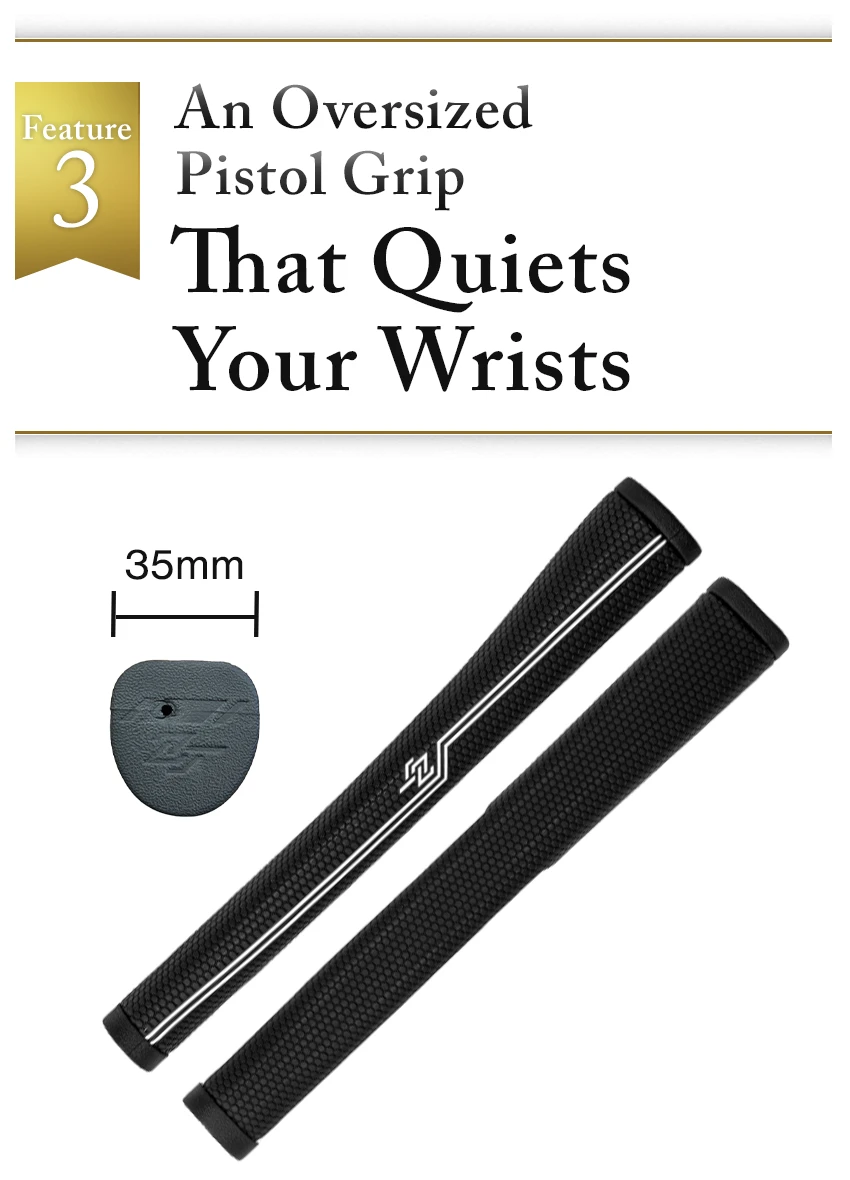
To counter this, ZT-STELLA uses
an oversized pistol-style grip.
It limits unwanted movement in your hands,
making it easier to stroke the putt with your shoulders and body.
It reinforces the face stability of the zero-torque design
from the grip side as well.
Feel and distance control
are where zero-torque putters often fall short.
Even with great direction,
if you can’t feel the impact in your hands,
matching your speed is difficult.
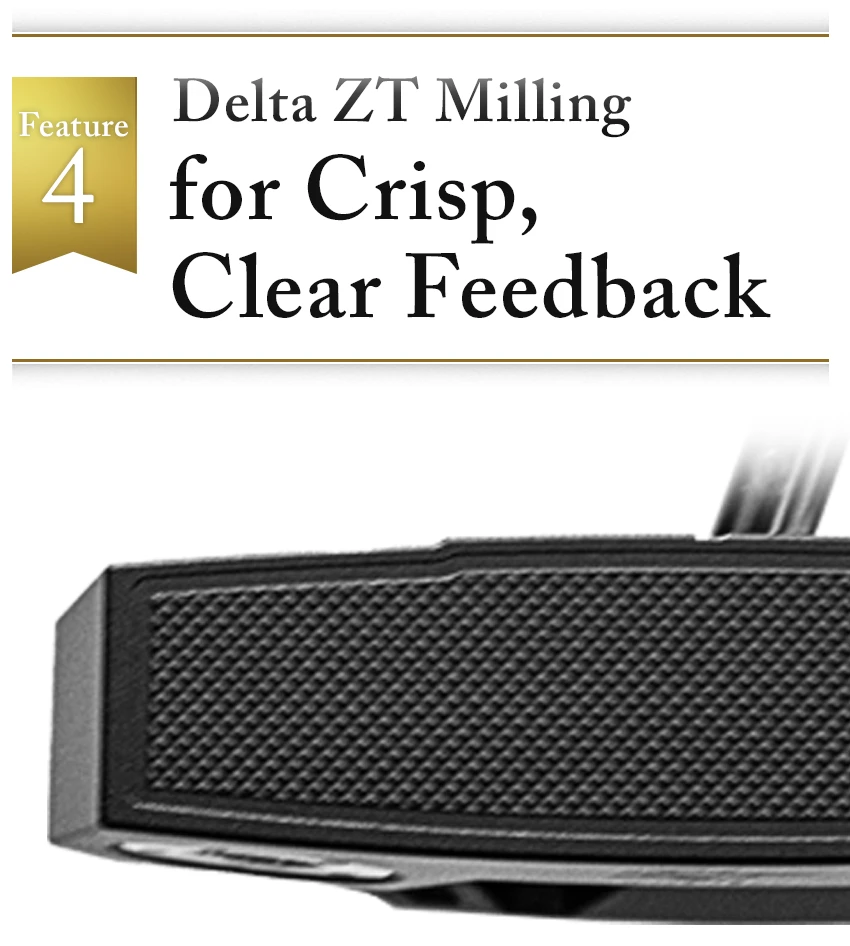
That’s why ZT-STELLA features
a face pattern developed specifically for zero-torque:
“Delta ZT Milling.”
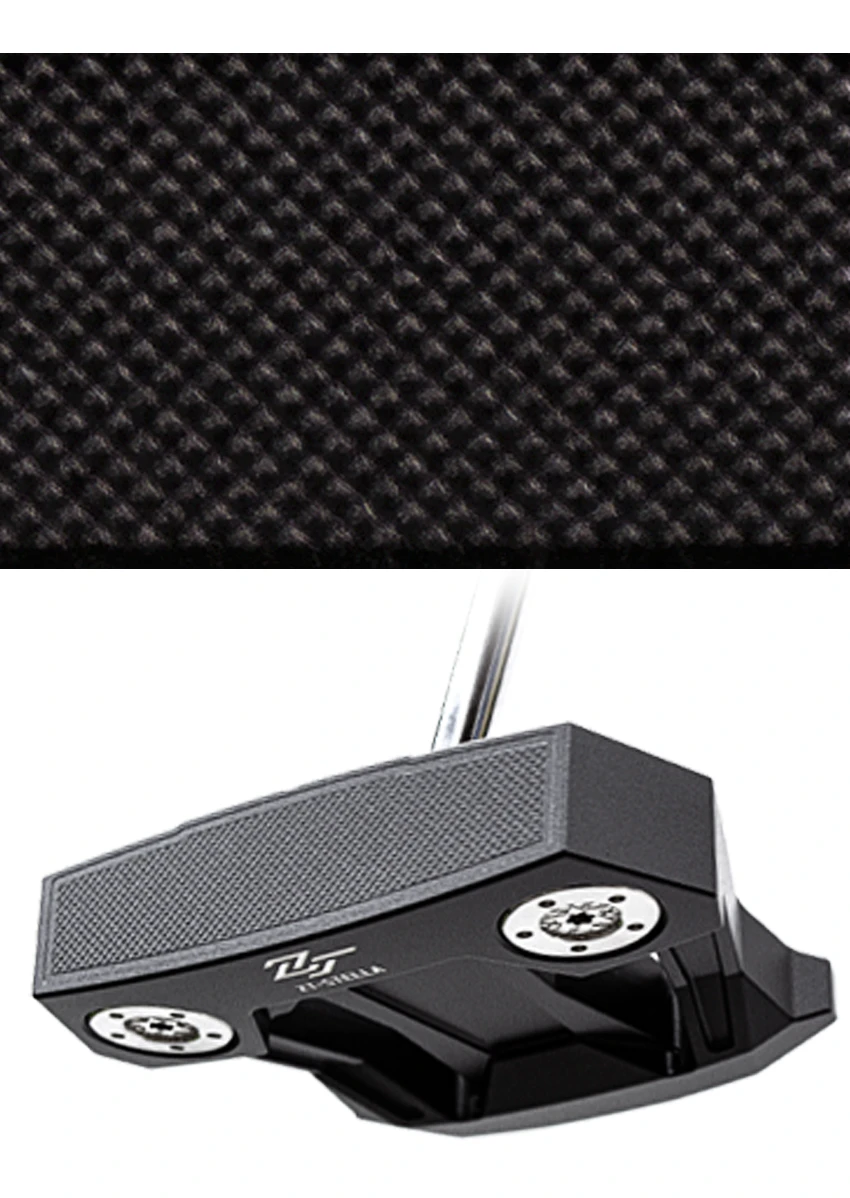
It’s Golf Live’s own zero-torque milling,
selected from more than 48 groove patterns
we tested to find the best feel and roll for a zero-torque putter.
A pattern of small raised points
makes impact easier to feel in your hands,
so you can sense whether you hit it firm or soft.
This helps you
not just with direction on short putts,
but with the distance control that matters on mid- and long-range putts.
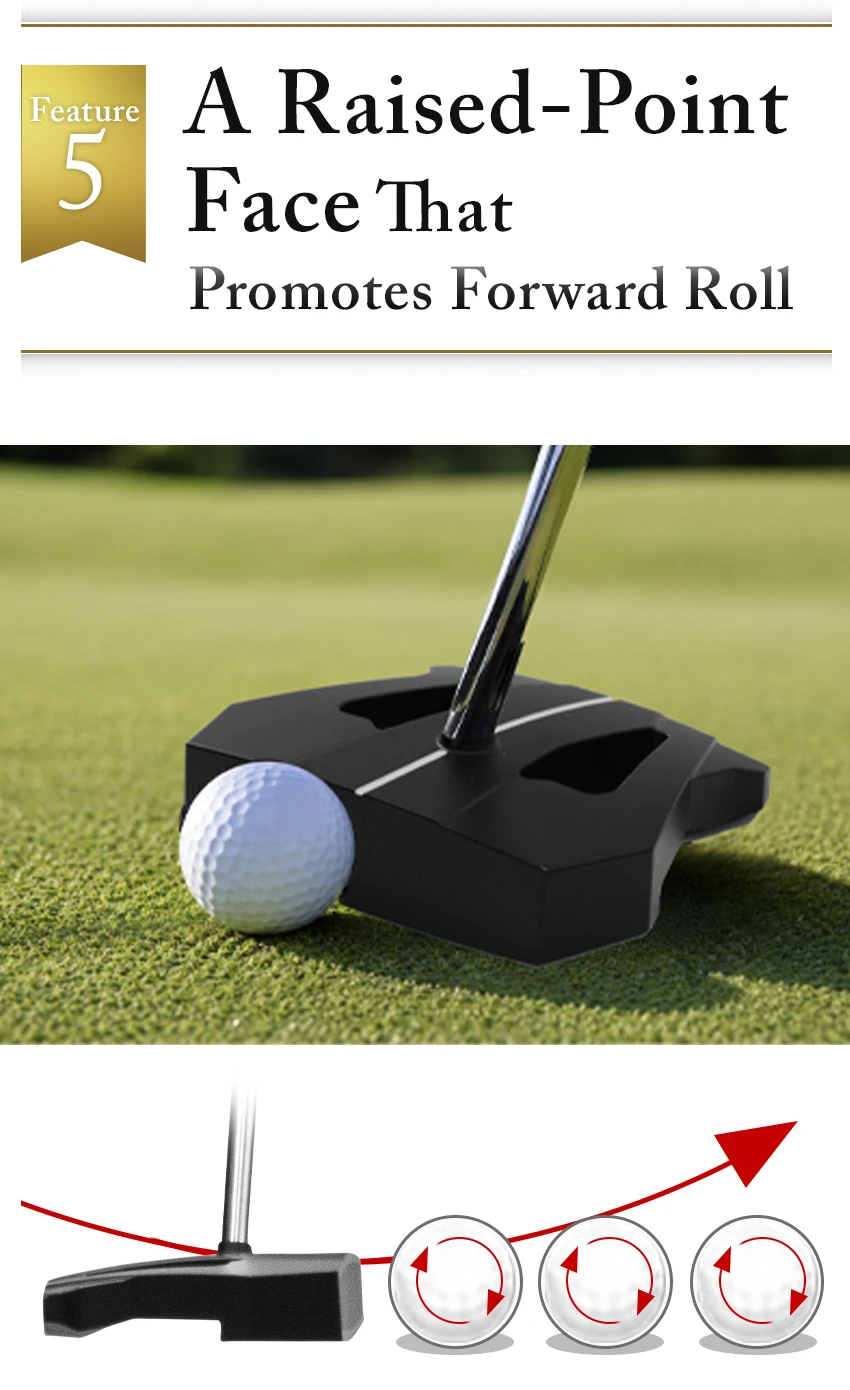
Good speed isn’t just about
how the ball leaves the face.
How smoothly the ball rolls forward matters just as much.
Beyond sharpening feel,
ZT-STELLA’s Delta ZT Milling is designed so
multiple raised points contact the ball,
promoting a true forward roll.
A more stable roll
holds its line better
and gives you that extra bit of roll at the edge of the cup.
If you often find yourself saying,
“My start line is fine, but it breaks off at the hole at the last second,” or
“My putts lose speed early and come up short,”
this stable roll will give you real confidence.
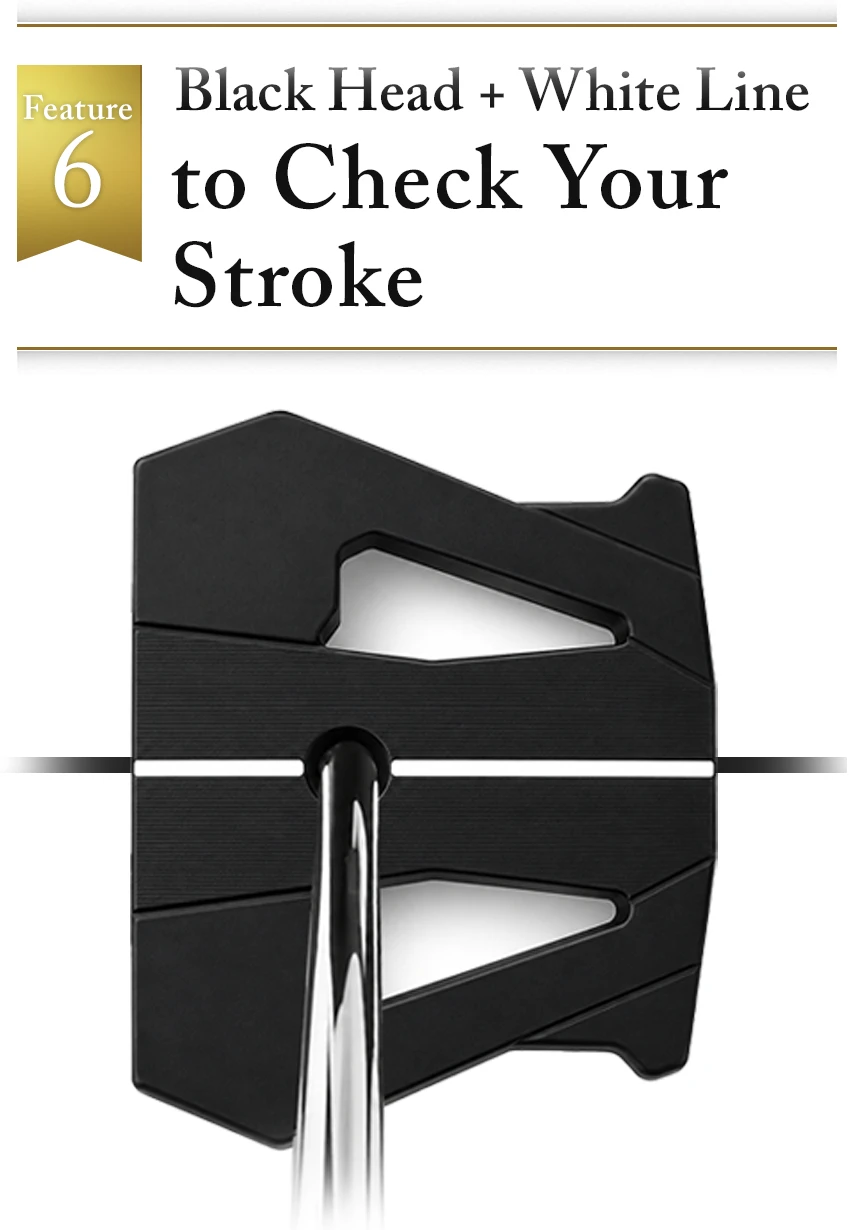
Even if zero-torque keeps the face from rotating,
your start line won’t be consistent
if the stroke itself is off.
So on ZT-STELLA,
we placed a bold white line
down the center of a black anodized head.
This white line isn’t just
for aiming at address.
When you make a practice stroke,
the line leaves a visual trail
that lets you see at a glance whether your stroke is wobbling.
Late in a round,
fatigue and nerves can throw off your stroke without you noticing.
Even then,
a few seconds of practice strokes before your putt
makes it easy to spot any drift.
It also gives you real confidence in your stroke
before you ever hit the putt,
which is a big mental advantage.
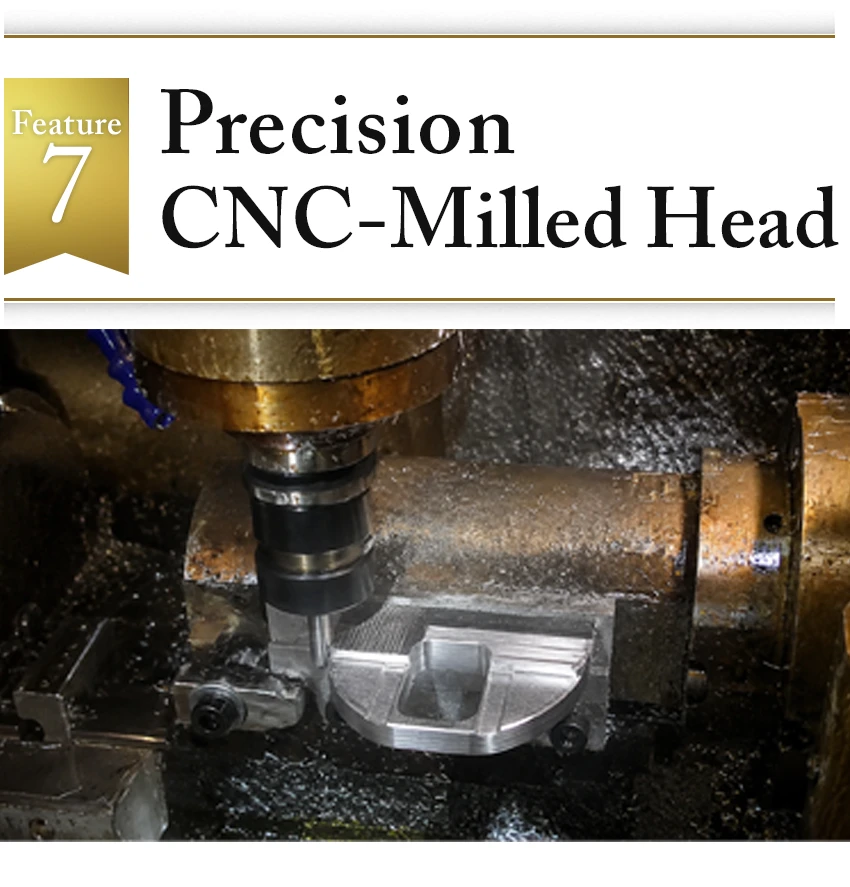
A zero-torque putter only works if it’s engineered with precision.
That’s why ZT-STELLA’s head is
precision-milled by CNC (Computer Numerical Control)
from solid aluminum.
It has enough weight that your hands can’t easily flick it,
which helps you make a smooth, unhurried stroke.
Wing-shaped rear weighting stabilizes the stroke,
and high MOI (moment of inertia) gives you a larger sweet spot.
You don’t need to rely on delicate hand feel. You get a forgiving sweet spot and a stable start line.
The result is a putter most golfers can switch to without any awkward adjustment period.


Finally, we’ve prepared a special bonus to help you cut down your putts.
There’s one putting problem no putter can solve.
It’s reading the green.
Even if you hit the putt exactly on the line and speed you pictured, it won’t matter if the line you pictured was wrong.
 So with every ZT-STELLA purchase,
you’ll receive “Green Reading: The Fundamentals,” a guide by a professional golf instructor, as a PDF and online video course.
People say green reading comes with experience. But if you don’t know the right way to read greens in the first place, it takes much longer to build that experience.
Use this putter with the right knowledge, and you’ll stop losing putts to surprises and start rolling your best putts ever.


Golfers who struggle with putting
tend to work hard to control and square the face.
But the more you focus on squaring the face and “starting it straight,”
the more your hands take over and the less natural your stroke becomes.
ZT-STELLA was designed to do
the opposite.
You don’t have to manipulate the face.
The design itself helps keep it from opening and closing.
A quick practice stroke is all it takes
to know you’re swinging straight.
From there, just focus on speed,
and you’ll be amazed how many more putts you make.
For speed, our dedicated milling
sends a crisp sense of touch to your hands and lets you feel every strike.
And so the awkward look at address doesn’t cause misses,
the grip offsets the forward shaft lean typical of zero-torque putters.
Put it all together,
and putting becomes simpler.
That’s ZT-STELLA.


ZT-STELLA uses a zero-torque design
that’s different from standard putters.
So if you’re thinking,
“I’m perfectly happy with my current putter,” or
“I don’t care about design differences,”
we’re not going to push it on you.


When you’re confident on 3- to 6-foot putts,
your whole game changes.
You can hit your first putt a little more firmly.
You can attack the hole with your chips.
Even on approach shots, the urge to go at the pin comes back.
Just having less fear on the greens
changes how you play the entire course.

Many of the zero-torque putters getting attention on the market today
sell for close to USD $650.
But even with expensive zero-torque putters,
it’s not unusual to hear golfers say:
“The forward shaft lean bothers me.”
“The feel is muted and I can’t control my distance.”
…and end up never getting comfortable with them.
What matters isn’t just extreme zero-torque performance.
It’s whether you can use it naturally in a real round.
ZT-STELLA was designed
so even first-time zero-torque users can handle it with ease.
On top of the zero-torque design that reduces face rotation, it gives you:
Dedicated milling for feel and forward roll.
The −2° Original ZT Grip for a more natural setup.
A black head + white line to check your stroke.
A precision CNC-milled head.
It all adds up to
a zero-torque putter designed for real-world ease of use.
So, how much do you think
a putter like this is worth?
By selling it exclusively through Golf Live,
we’ve cut out the distribution and advertising costs of retail.
As a result,
we’ve kept the price after launch to just USD $598.
That also means ZT-STELLA
isn’t available in any shop or large retail store, anywhere in the world.
It’s an original zero-torque putter,
available only from Golf Live.
And to celebrate the launch of ZT-STELLA,
we’ve prepared
an even more special introductory price.


If you’re going to be one of the very first to own ZT-STELLA,
I have one small favor to ask.
After your purchase, we’ll send you an email with a short survey.
We’d love to hear how the putter works for you.
Teaching pros and testers
have already tried ZT-STELLA.
But what we really want to know is
how it changes things for everyday golfers
who struggle with putting.
We’d like to use your real feedback
in future promotions and product information.
To celebrate the launch of ZT-STELLA,
and as a thank-you in advance for your feedback,
instead of USD $598 after launch, it’s just
USD $398(Free shipping · Import duties and taxes may apply depending on your country)
Of course, this is a request, not a condition of purchase.
There’s no obligation at all.
But when something works, you want to share it.
We’re confident ZT-STELLA will make such a difference
that you’ll want to tell us about it.


ZT-STELLA has a highly specialized design.
Everything from the grip to the face milling was built specifically for this one model.
So unlike mass-produced putters,
we can’t keep large amounts in stock at all times.
For this launch, we have
only 79 putters from the first production run.
The special price,
over 30% off the price after launch (USD $598),
is a limited launch offer.
Once this batch sells out,
we can’t say when the next shipment will arrive or whether this offer will be available again.
“I’ve been curious about zero-torque putters…”
“…but I was worried about the awkward setup and distance control.”
“I want to fix my short-putt accuracy by changing my equipment.”
If that sounds like you,
you’re exactly who we’d love to have try ZT-STELLA.
This offer is strictly first come, first served, and this page will close once stock runs out.
Don’t wait too long.
Tap or click the image to enlarge.
| Total weight | approx. 535 g |
|---|---|
| Head weight | 360 g |
| Head material | A6063 aluminum, milled from solid |
| Manufacturing | CNC milled |
| Finish | Black anodized |
| Loft | 3° |
| Lie | 71° |
| Shaft | 110 g |
| Length | 34 in |
| Grip angle | −2° |
*Total weight may vary by about ±5 g.
Please see the product page for full specs and included items.


 Delivery is typically scheduled to take about 7 to 10 days, but this may vary slightly depending on shipping conditions. Delivery will be handled via EMS.




Golfers who struggle with putting
tend to blame themselves: “My stroke is bad,” or “I just don’t practice enough.”
Skill matters, of course.
But if you tend to get nervous under pressure, or you have very active hands,
your results are more likely to be affected by
the face rotation built into conventional putters.
So if you choose a putter that’s designed from the start to reduce face rotation,
you can get better results in a much simpler way.
And that’s not cheating.
It’s just like using a driver designed to reduce slices.
Choosing a putter that makes good results easier is a completely natural choice.
Less worry about manipulating the face with your hands.
Less doubt at address.
Distance control you can actually feel.
An easier way to spot when your stroke goes off track.
ZT-STELLA is a new zero-torque putter
built to make putting that simple.
Isn’t it time to fix the putting doubts you’ve carried for years,
at the root?
Quantities are limited,
so don’t wait too long to decide.
Tap or click the image to enlarge.
| Total weight | approx. 535 g |
|---|---|
| Head weight | 360 g |
| Head material | A6063 aluminum, milled from solid |
| Manufacturing | CNC milled |
| Finish | Black anodized |
| Loft | 3° |
| Lie | 71° |
| Shaft | 110 g |
| Length | 34 in |
| Grip angle | −2° |
*Total weight may vary by about ±5 g.
Please see the product page for full specs and included items.
Delivery is typically scheduled to take about 7 to 10 days, but this may vary slightly depending on shipping conditions. Delivery will be handled via EMS.